CO2
10.6 µm class
- Typical fit
- Paper, glass, coated films
- Verify
- Absorption and thermal edge

Laser coding application desk
Compare CO2, fiber, and UV process windows against the substrate, required code contrast, line speed, available focal distance, extraction route, and inspection method before equipment is released for production.
Process families
These system families are application routes, not interchangeable boxes. A usable recommendation begins with representative production samples, the final artwork, the target line rate, and a defined acceptance method.
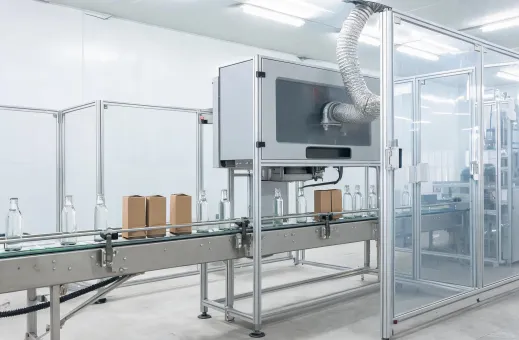
A CO2 source is often assessed for paperboard, glass, coated film, labels, and selected polymers. The sample trial should record wavelength, lens, focal distance, mark field, line speed, and extraction condition. Excess thermal input can deform thin film or create an unacceptable edge, so contrast alone is not a sufficient pass criterion.
Review CO2 and fiber categories →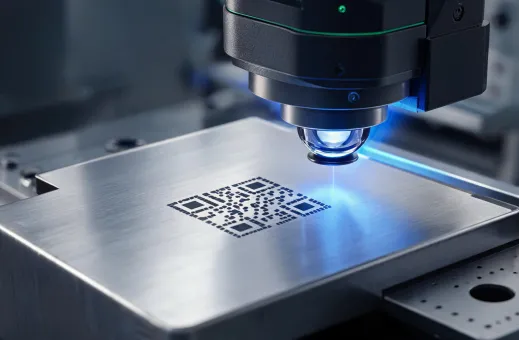
Fiber processing is considered when the substrate absorbs near-infrared energy and the required mark can be achieved without weakening the part or damaging a functional coating. Evaluation includes pulse settings, scan speed, hatch strategy, lens field, fixture repeatability, and code grading after cleaning, abrasion, or the customer-defined downstream process.
See production-use criteria →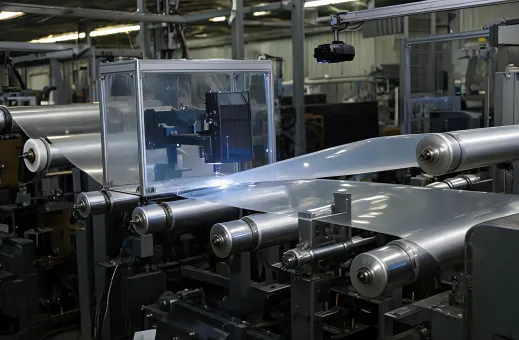
UV is evaluated where a shorter wavelength may create the required contrast with a smaller thermal footprint. That does not make it universally safer for every polymer or ink system. Trials should check film strength, barrier integrity, rub resistance, migration requirements set by the packaging owner, and readable code quality at both nominal and worst-case line speed.
Prepare a sample-test brief →Integration controls
The process must work as a guarded production station, not only as a bench demonstration. The handover record should distinguish confirmed test results from settings that remain conditional on the production line.
Supply final artwork, smallest character or module, contrast target, permanence test, and inspection standard. A visually dark mark may still fail machine vision.
Run representative samples across line-speed and material variation. Record the settings that pass, the settings that fail, and the margin between them.
Confirm enclosure class, interlocks, focal geometry, product handling, fume extraction, cooling, utilities, service clearance, and operator access.
Exercise message selection, PLC signals, reject logic, inspection feedback, user permissions, recipe control, and recovery after an interrupted cycle.
Evidence package
The deliverable is organized around four records. Values shown in a proposal remain application assumptions until they are confirmed against the customer sample, production geometry, and acceptance method.
Material lot, artwork, trial settings, line-speed condition, photo record, and pass/fail reason.
Mechanical envelope, focal datum, guarding, extraction, utilities, communication points, and reject flow.
Readable code rule, durability method, inspection setup, challenge samples, and responsible approver.
Approved recipe, operator steps, maintenance tasks, spare-risk notes, escalation path, and open actions.
Application input first
Share the substrate, code content, nominal and maximum speed, available marking window, downstream handling, cleaning exposure, and the inspection method. The review can then separate a feasible process route from a claim that still needs testing.